balloon pump cardiac support
- related: cardiac supportive devices
- tags: #permanent
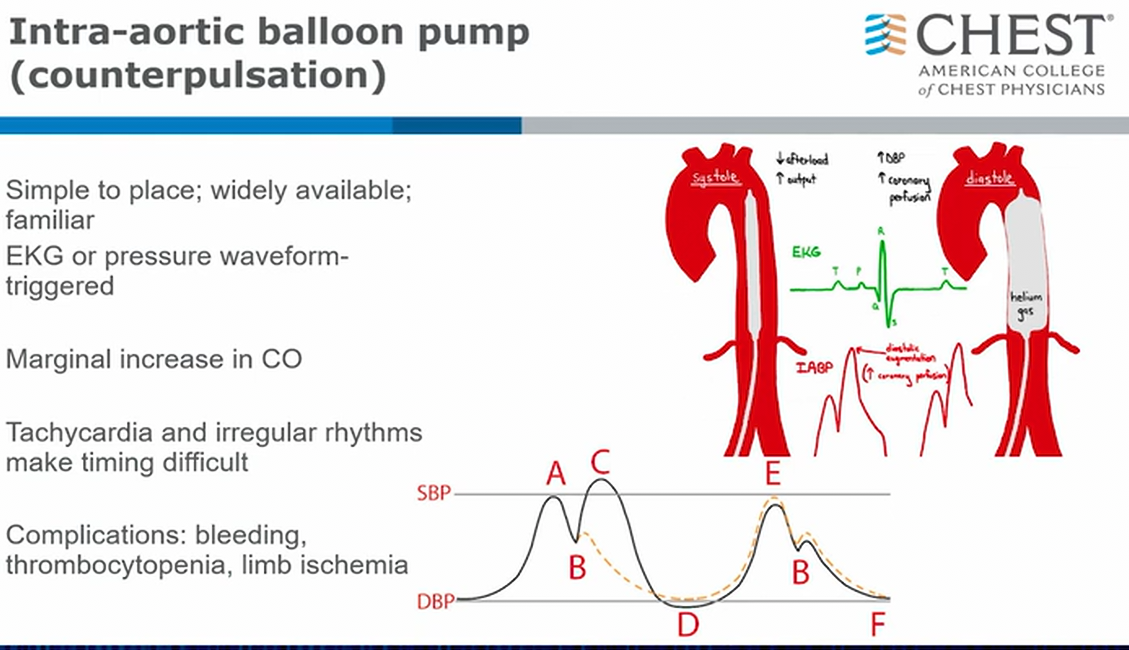
Balloon pumps have been around for a long time. It is easy to place and widely available. Balloon pump is a central arterial catheter around 8 Fr in size that’s placed either via femoral or via axillary and sits in aorta. It inflates in diastole at dicrotic notch, increasing diastolic pressure and retrograde flow to improve coronary artery perfusion. Inflation also helps antegrade flow to the mesentery and lower bodies. It deflates right before systole to allow antegrade flow from native heart.
- no anticoagulation at baseline
Triggers
- Inflation is either triggered by ECG or wave form or pressure. This can be set to automatic and usually pretty spot on. If you have trouble then go to 1:2 or 1:3 to troubleshoot to actually see the waveform
- triggered by heart beat. More tachycardic: less easy to track. Can probably do ok with HR < 120
Weaning
wean by ratio (to 1:2) or by filling (to 50%)
- weaning by rate: go down to 1:1, 1:2 (common, if can tolerate for a few hours, then probably ok. At night probably go back to 1:1 overnight to avoid develop clot), 1:3 (rare, increases risk for clot)
- weaning by volume: go down amount in the balloon. Most of time, just use rate.1
Limits and complications
- doesn’t do too much. Marginal increase in CO, decrease in PVR, 10-20%
- sacrifices blood supply in descending thoracic aorta
- worse with tachycardia and worse in afib
- no mortality benefit
- complications: dissection, clots, aortic insufficiency, limb ischemia, embolization 2
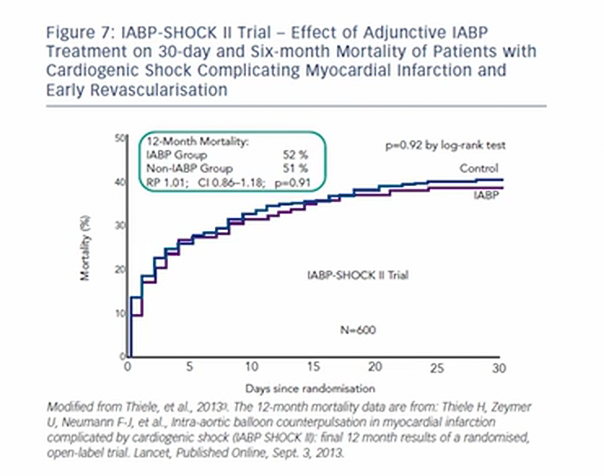
- no difference in mortality using balloon pump