NIV initial settings
- related: Sleep and Sleep Disordered Breathing, Ian 3 2026 Optimizing Sleep Apnea
- tags: #literature #sleep
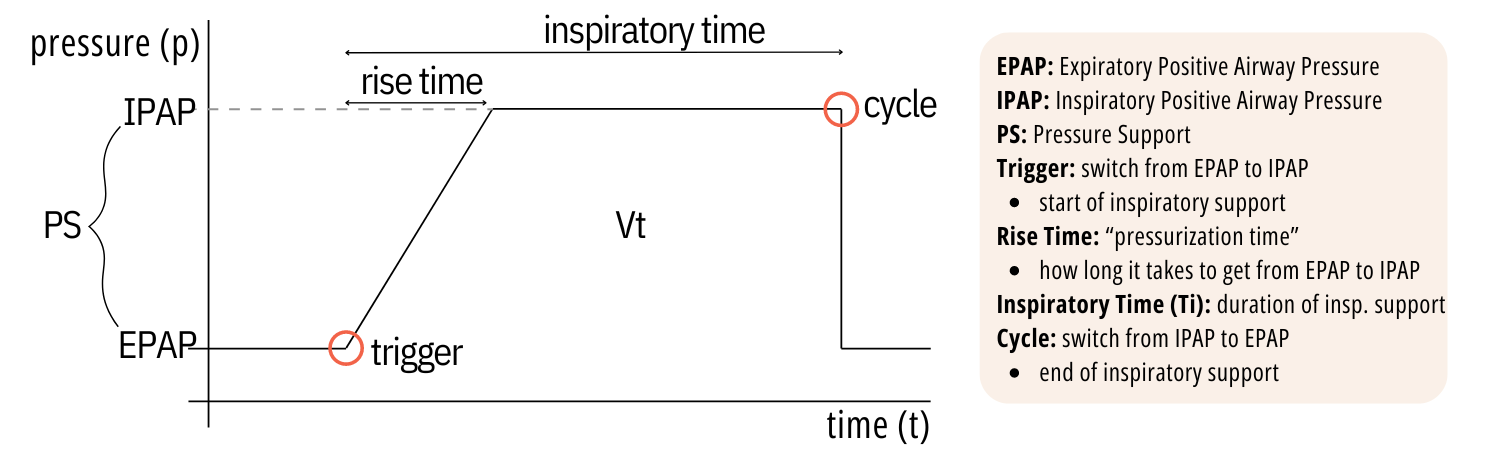


Trigger Sensitivity
- determines when EPAP is changed to IPAP
- increasing the trigger sensitivity makes it easier to start a new breath
- increase the trigger sensitivity by lowering the flow needed
- e.g. 1L is a higher trigger sensitivity than 2L and easier to start new breath
Trise
- Use short Trise for COPD and long Trise for NMD (takes longer for diaphragm to move)
- COPD: 100ms. Very short Trise time can cause laryngospasm and air to come out and turbulent flow
- NMD: 600ms. Use longer Trise, otherwise they can feel overwhelmed by flow 1
Ti
- total time spent in inhalation cycle
- avoid Trise higher than Ti
- only for timed modes and not for spontaneous breath
- COPD: shorten rise time can feel they can get the breath quicker
Cycle Sensitivity
- determines when switched from IPAP to EPAP
- higher cycle sensitivity = breath cut off sooner
- increase in sensitivity makes it easier to switch. Good for COPD patients
- decrease sensitivity makes it harder to switch. Better for NMD patients.
I to E ratio
- COPD: target 1:3
- NMD: target 1:1, sometimes I>E
Leaks
- Target less than 50L
- 25L better
Initial Settings
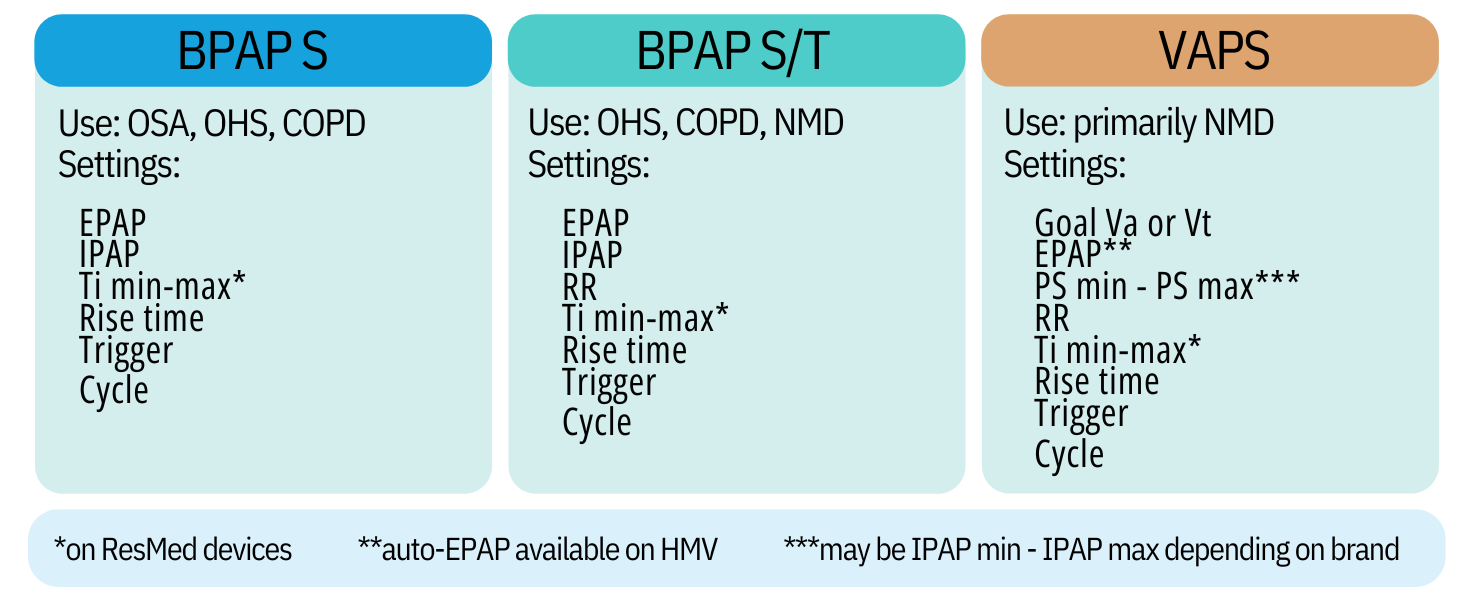
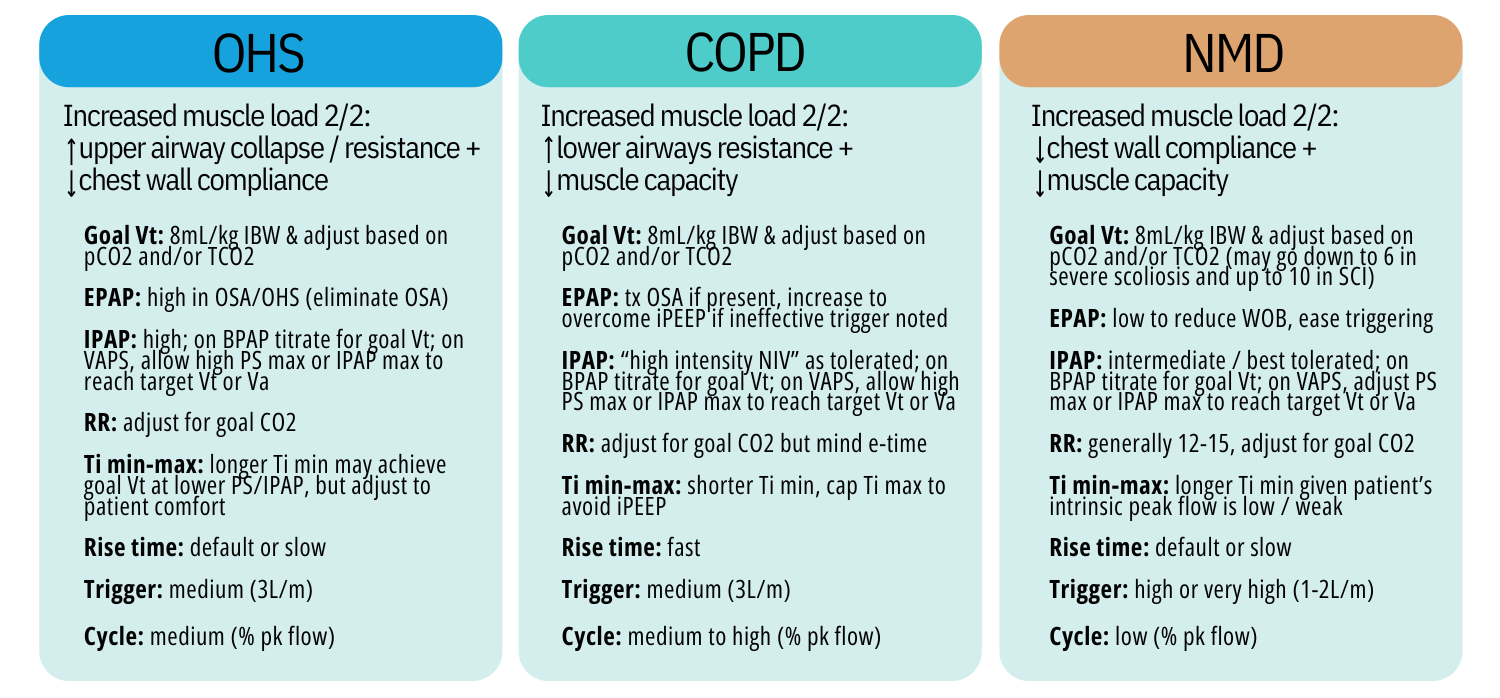
- target high intensity IPAP between 15 and 20s in COPD patients (only way to improve mortality and outcome).


Links to this note
-
Infective trigger can mimic CSA in NMD patients
- Infecctive trigger in spontaneous mode in NMD can look very similar to central sleep apnea with high AHI. You can avoid this by either increase trigger sensitivity (NIV initial settings) or switch to BPAP-ST mode or home mechanical ventilators (respiratory assist devices vs home mechanical ventilators, AirCurve 10 different modes available).