lung cancer risk calculator identifies more person than using smoking hx
- related: lung mass and cancer
- tags: #literature #pulmonology
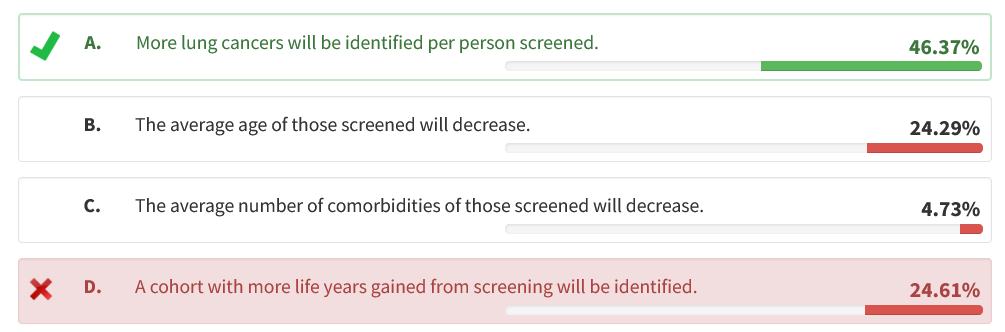
Lung cancer risk calculators are more efficient (ie, find more people with lung cancer per person screened) at identifying individuals likely to have or develop lung cancer than age and smoking-based screening eligibility criteria (choice A is correct).
Lung cancer screening is a balance of benefit and harm. The benefit of lung cancer screening is a reduction in the number of individuals who die from lung cancer. Benefit has been shown in two large controlled trials of lung cancer screening, with use of low-radiation-dose chest CT imaging as the screening test, when applied to a cohort at high risk of having or developing lung cancer on the basis of age and smoking history thresholds. Harms from lung cancer screening are related to the performance of the screening test and management of the test’s findings. The effect of cumulative radiation exposures from imaging performed for screening and evaluating lung nodules, complications of invasive testing performed to evaluate benign lung nodules, overtreatment of lung cancers that would not have affected a patient’s life, and anxiety related to test findings are all known potential harms of lung cancer screening.
The balance of benefit and harm from screening is influenced by the population being screened. The relative benefit and harms of lung cancer screening are affected by the likelihood of finding an early-stage lung cancer, an individual’s age, the ability to tolerate the evaluation of screening-detected findings, the ability to tolerate curative-intent treatment, comorbidities, and life expectancy.
Lung cancer risk calculators incorporate known lung cancer risk factors into sophisticated models. Age, sex, detailed smoking history, family history, education level, a history of previous cancer, a history of COPD, BMI, and race and ethnicity are factors included in some risk calculators. Although lung cancer risk calculators are more efficient at identifying individuals with lung cancer, the use of these tools also influences the balance of benefit and harms from lung cancer screening. Because age and comorbidities are included in the calculations, an older population (choice B is incorrect) with more comorbidities (choice C is incorrect) is identified. This results in fewer life years gained from screening per cancer diagnosed, more nodules found per patient screened, and more complications from the evaluation of nodules and treatment of cancer. The result of this shift in balance is that the life years gained from screening using risk calculators is not higher than age and smoking history-based criteria (choice D is incorrect). Examples of validated risk and benefit calculators include the PLCOm2012, Life Years Gained From Screening-CT, Lung Cancer Death Risk Assessment Tool, and Bach models.
By incorporating life expectancy with risk calculation, or using calculators designed to estimate benefit (life years gained), an optimized balance of benefits and harms may be achieved. The complexity of these calculations makes them somewhat difficult to implement. Although guidelines may recommend consideration of their use, current payment policies focus only on age and smoking history criteria.1