SCAI stages of shock
- related: cardiogenic shock
- tags: #literature #cardiology
Society for Cardiovascular Angiography & Interventions
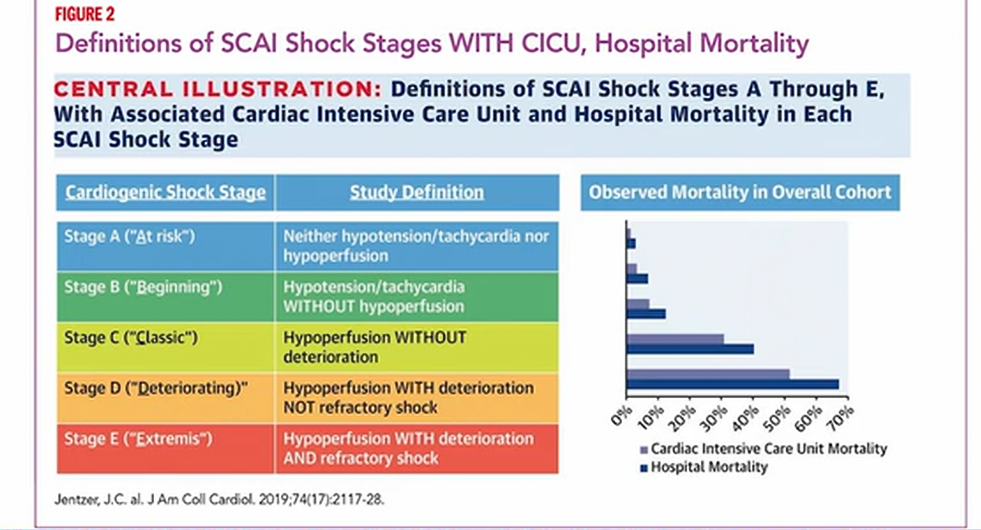
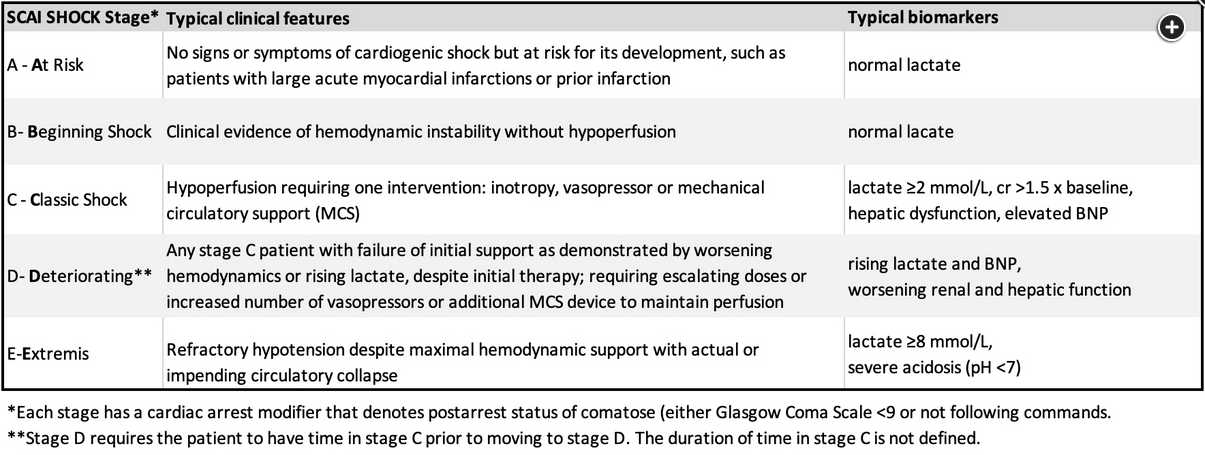
There are five stages, A through E, in the SCAI SHOCK classification. Patients in stage A are at risk for cardiogenic shock but have not yet developed it. Patients in stage B have hemodynamic instability without hypoperfusion. Patients in stage C have hemodynamic instability and evidence of hypoperfusion. Patients in stage D are not responding to initial support, as evidenced by rising lactate levels, increased doses of vasoactive drugs, and potential need for additional mechanical circulatory support to maintain perfusion. Patients in stage E have refractory shock with actual or impending circulatory collapse. 123
Links to this note
-
- contrast this with SCAI stages of shock
Footnotes
-
Naidu SS, Baran DA, Jentzer JC, et al. SCAI SHOCK stage classification expert consensus update: a review and incorporation of validation studies: this statement was endorsed by the American College of Cardiology (ACC), American College of Emergency Physicians (ACEP), American Heart Association (AHA), European Society of Cardiology (ESC) Association for Acute Cardiovascular Care (ACVC), International Society for Heart and Lung Transplantation (ISHLT), Society of Critical Care Medicine (SCCM), and Society of Thoracic Surgeons (STS) in December 2021. J Am Coll Cardiol. 2022;79(9):933-946. PubMed ↩
-
Thayer KL, Zweck E, Ayouty M, et al. Invasive hemodynamic assessment and classification of in-hospital mortality risk among patients with cardiogenic shock. Circ Heart Fail. 2020;13(9):e007099. PubMed ↩